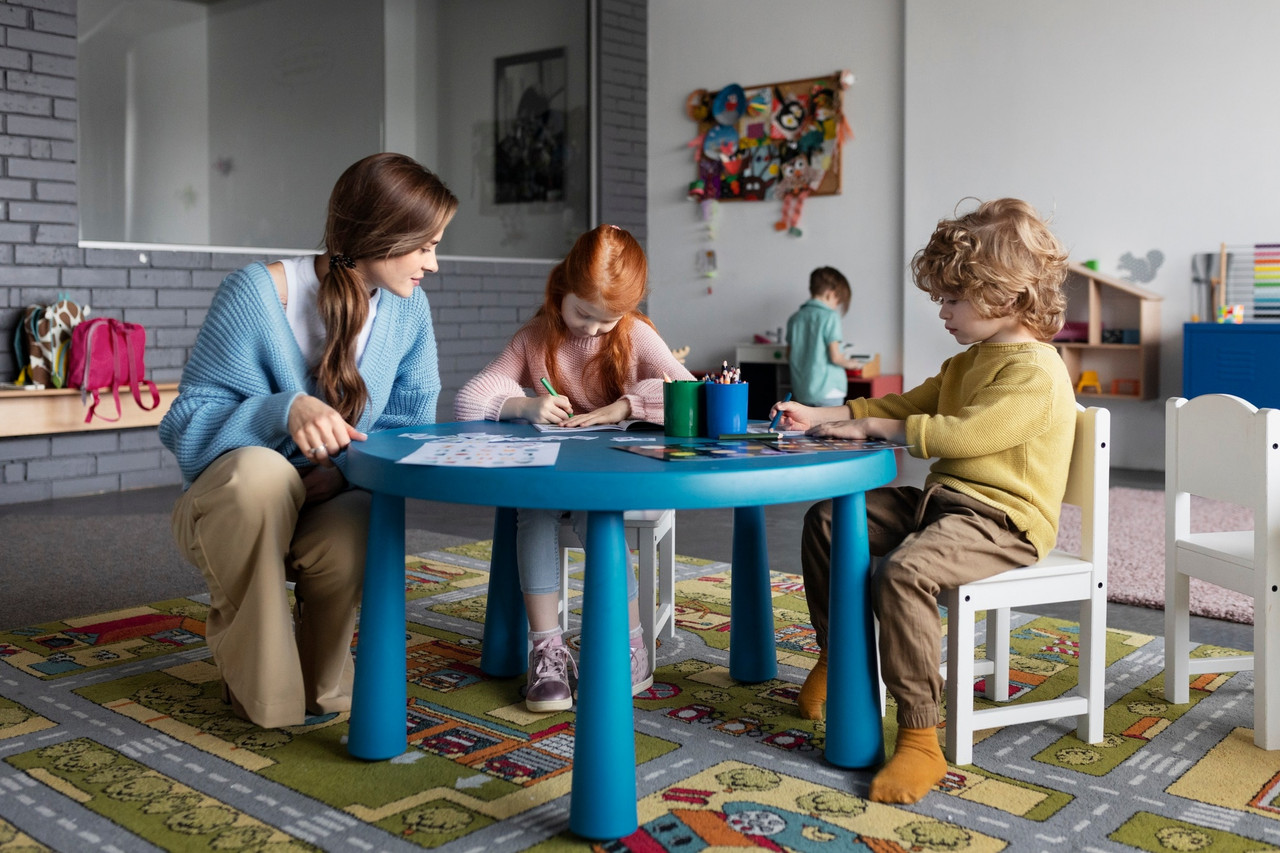
Developing Social Skills Through Play in U.S. Preschools
Play is the engine of learning in early childhood. In the United States, play-based approaches help children develop critical social and emotional skills needed to succeed academically and personally.
Play as a Tool for Learning
Through play, children practice negotiation, language development, empathy, and conflict resolution—skills essential for classroom learning and future relationships.
Social Skills Gained Through Play
- Communication: Express wants and needs through pretend play, storytelling, and role-playing.
- Cooperation & Teamwork: Work together during cooperative games and shared projects.
- Emotional Regulation: Learn to take turns, manage frustration, and navigate social challenges.
- Problem Solving: Develop critical thinking while building, experimenting, and exploring.
How High-Quality Preschools Promote Play
Look for programs that offer open-ended materials, trained educators who guide play effectively, and a mix of child-led and teacher-guided play activities.
Role of Caregivers and Parents
- Narrate and discuss children’s play to enhance language skills.
- Teach conflict-resolution strategies and scripts.
- Reinforce empathy by labeling feelings and encouraging understanding.
- Maintain predictable routines and transitions to provide a secure learning environment.
Conclusion
Play-based learning in U.S. preschools is a powerful method for developing social skills, emotional intelligence, and problem-solving abilities. Parents and educators who support meaningful play help children thrive in school and life.